Patient Resources
Exercises for the Lower Extremity Amputee
A structured guide to beginning and advanced stretching and strengthening exercises designed to support flexibility, balance, gait, coordination, and overall function.
General Exercise Guidelines
Follow these recommendations when exercising at home, in physical therapy, or at a gym or health club.
- Consult your care team. Ask your physician or physical therapist which exercises are appropriate based on your health, medications, mobility, and rehabilitation goals.
- Exercise with your prosthesis on. This helps train your muscles to work as they do when you walk. Inspect your prosthesis daily.
- Move slowly and with control. Avoid jerking movements and concentrate on the muscle group being exercised.
- Build up gradually. Begin slowly. Short daily sessions are generally preferable to long sessions that may increase the risk of injury.
- Stretch consistently. Stretch daily and before and after strengthening exercises. Hold each stretch for 20–30 seconds and repeat it three to four times.
- Avoid bouncing. Increase each stretch gradually. A sustained stretch is more helpful than a ballistic or bouncing stretch.
- Strengthen regularly. Perform strengthening exercises at least three times per week. Begin with a small number of repetitions and increase only when the exercise becomes easy.
- Do not exercise through pain. Stop any exercise that causes pain, particularly sharp or burning pain in the residual limb.
- Watch for prolonged discomfort. Discomfort that lasts more than a few days may mean you are exercising too hard or progressing too quickly.
- Check your skin. Inspect the residual limb often for redness, irritation, or pressure, especially during the first few weeks.
- Seek medical care for injuries. A physician should evaluate any minor injury that does not respond to routine care and any acute injury immediately.
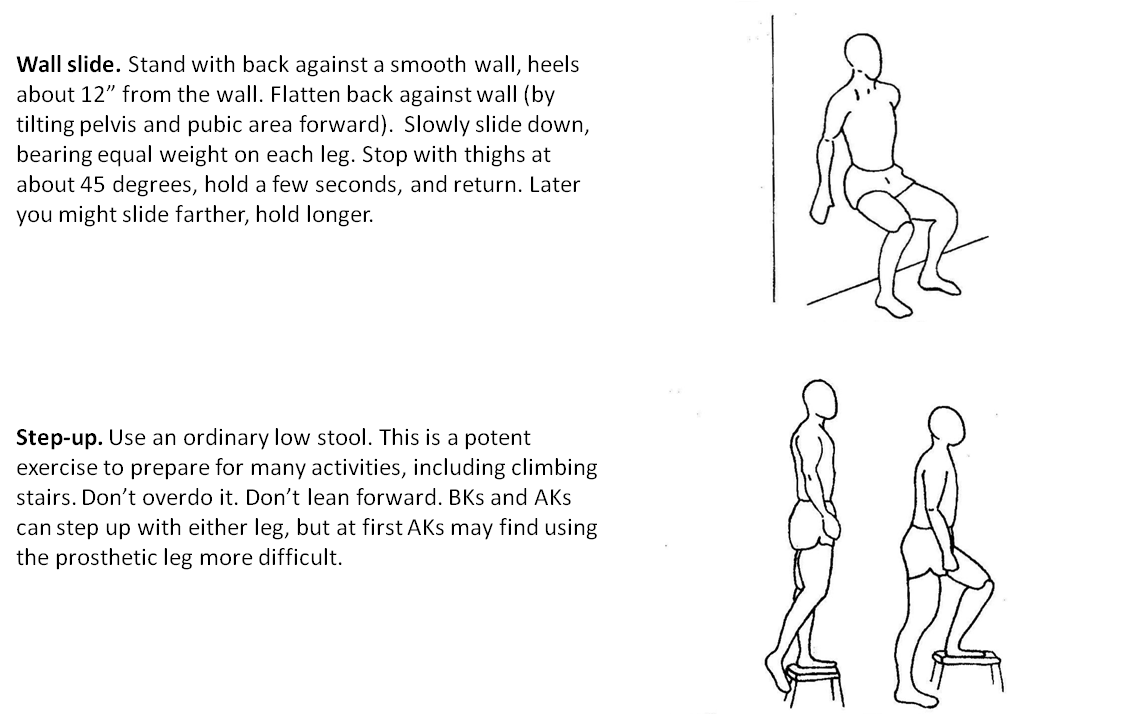
Beginning Stretching Exercises
Stretching helps keep both the sound limb and residual limb flexible, helps prevent injury, and may make walking easier and more natural. The illustrations are guides; do not worry if you cannot achieve the exact position shown.
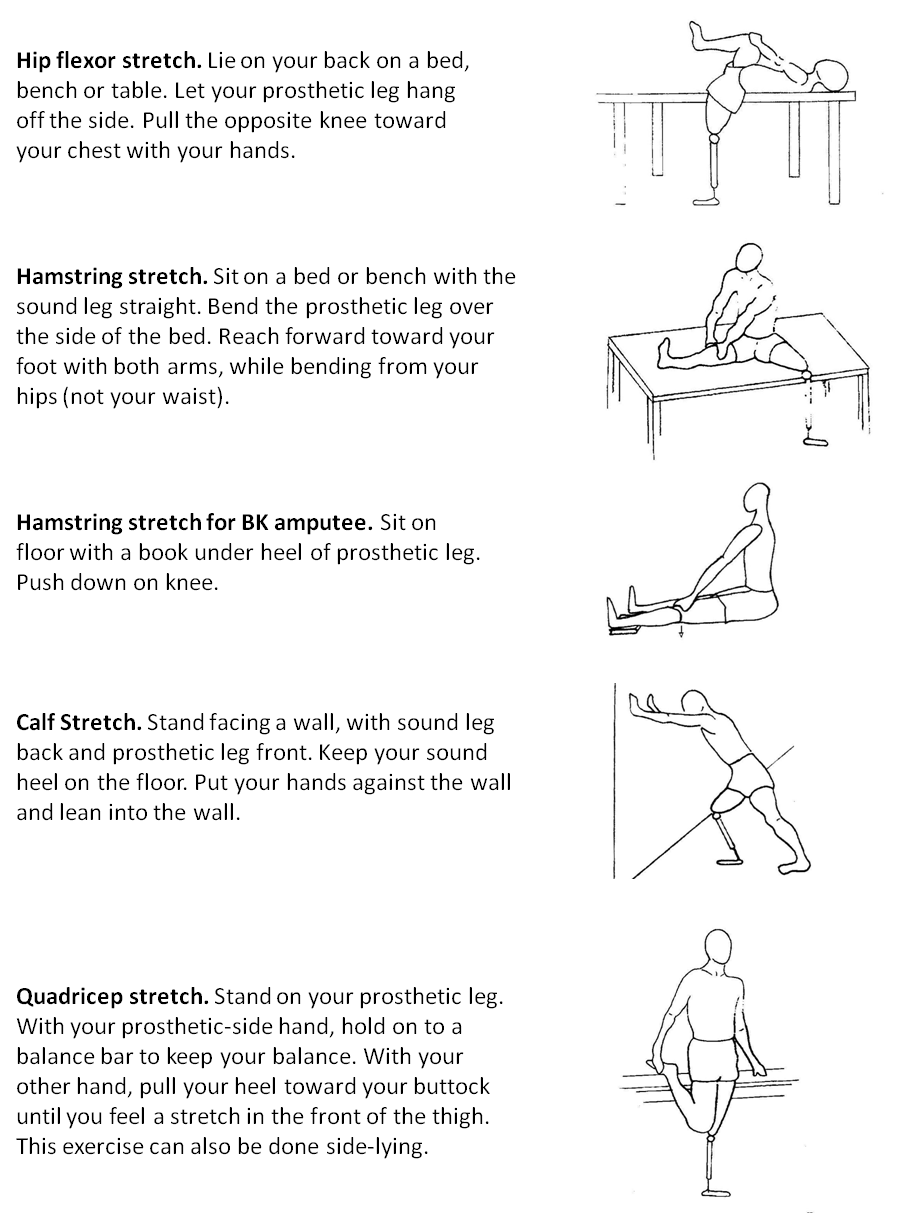
Advanced Stretching Exercises
These advanced stretches may become appropriate as your activity level increases. They can be especially helpful for people who run or participate in recreational or competitive sports.
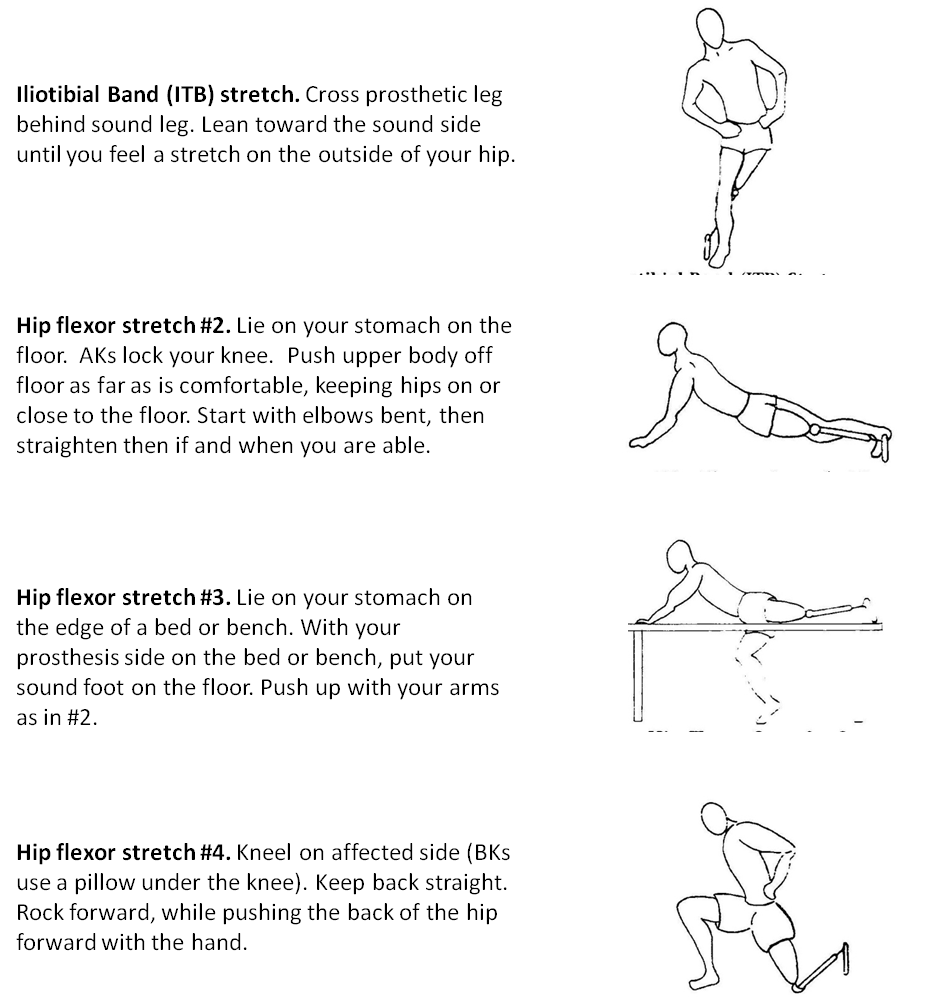
Beginning Strengthening Exercises
These exercises move from flexibility to strength. Beginning and advanced strengthening programs can often be completed at home with minimal equipment in approximately 20–30 minutes. Increased strength may help improve gait, coordination, balance, and overall function.
Above-Knee Amputee Focus
Important muscle groups include the hip extensors or gluteal muscles, hip abductors, hip adductors, and hip flexors.
Below-Knee Amputee Focus
Important muscle groups include the quadriceps, hamstrings, and the hip muscles associated with the residual limb.
Move slowly into each illustrated position, hold it for a few seconds, relax, and repeat.
The appropriate number of repetitions depends on your physical condition. Consult your physical therapist for individualized guidance.
Perform the exercises on a flat, firm surface such as a firm bed or the floor with an exercise pad. Above-knee amputees using a hydraulic knee should lock the knee when directed by their care team.
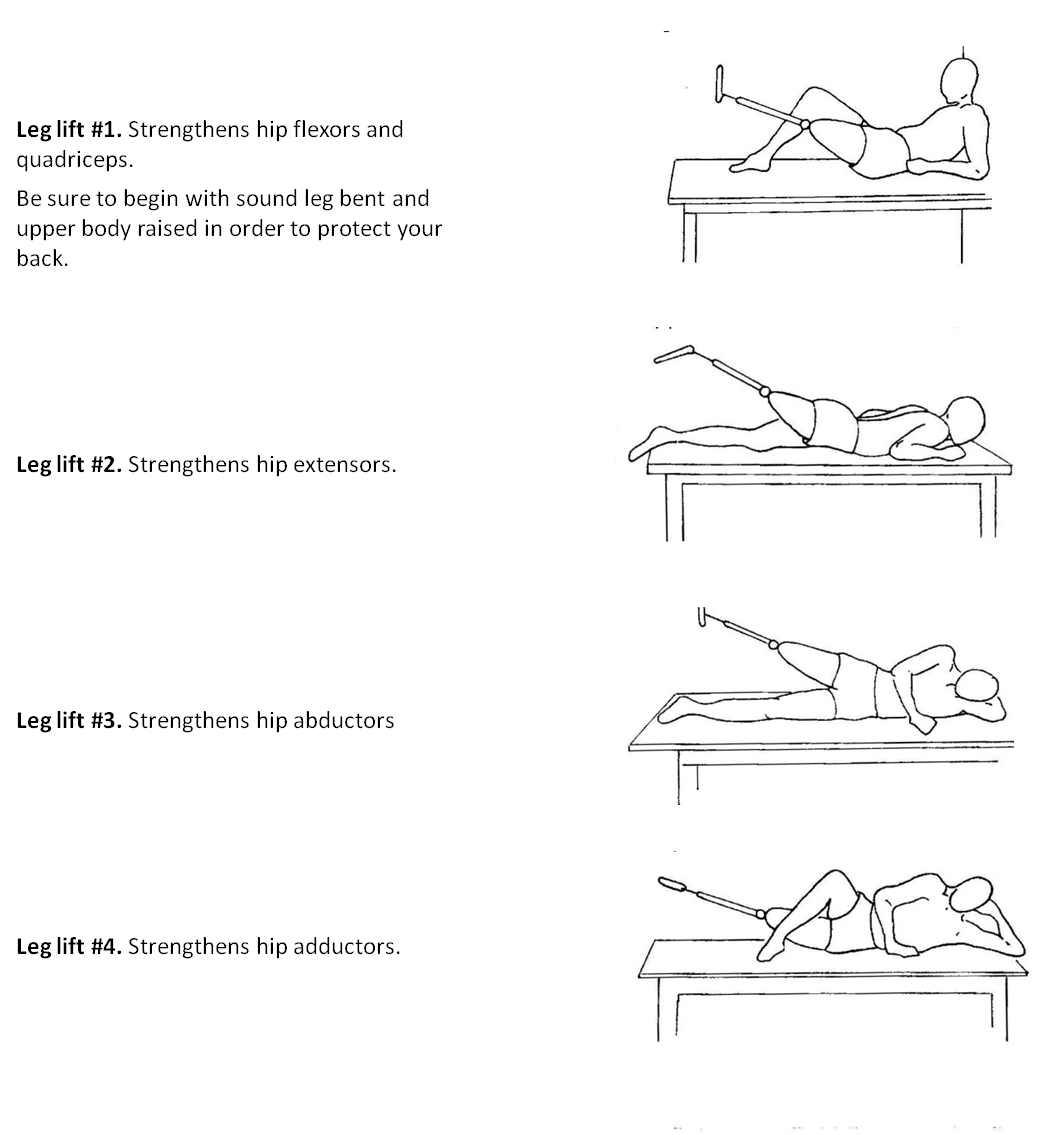
Advanced Strengthening Exercises
These exercises may be added after you have developed sufficient strength and become more active. Ask your physical therapist when it is appropriate to progress to advanced exercises.